

Electric Van Hire for Business: Is It Worth Making the Switch?
More businesses across the West Midlands are asking the same question before their next van hire: does it make sense to go electric? With fuel costs, emissions zones and company sustainability targets all part of the conversation now, it's a fair question - and one with a genuinely useful answer, rather than a one-size-fits-all yes or no.
Here's what to weigh up before you book an electric vehicle for your business, and what's actually available from TCHire right now.
What TCHire has in its electric range
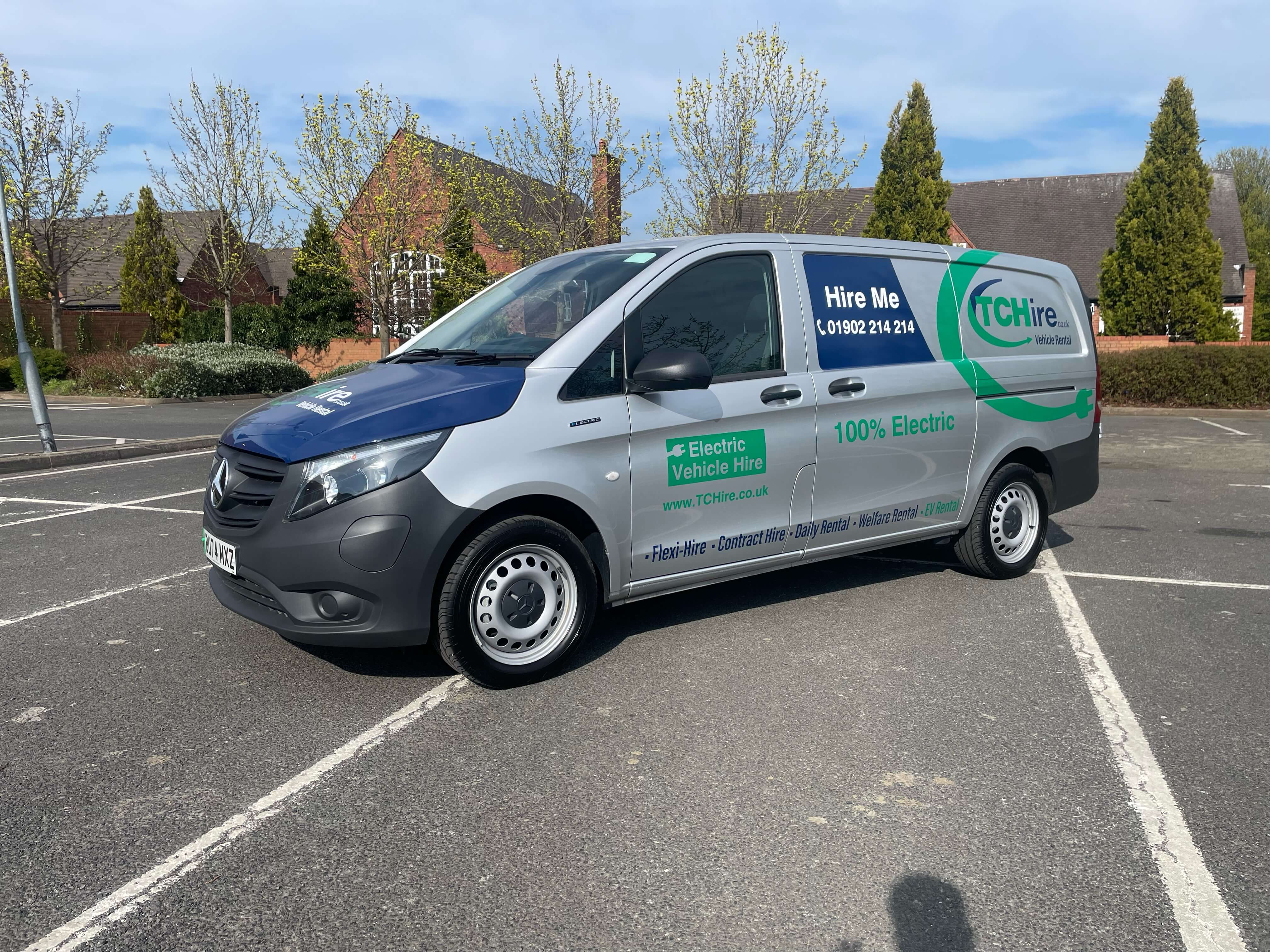
We've built out a proper electric line-up rather than a single token model, so businesses have a genuine choice depending on what the job needs. On the van side, that's the Mercedes eCitan Electric and a short-wheelbase (SWB) Mercedes electric van, automatic as standard. For businesses that need a car or a more passenger-focused vehicle rather than a load-carrying van, we also hire the Volkswagen ID.3 Life Pro and the Volkswagen ID. Buzz.
The Mercedes eCitan: an easy switch from a diesel panel van
The eCitan is the fully electric version of one of the most established small vans on the road, and it's built to make the switch from diesel as painless as possible rather than asking drivers to relearn how they work. It runs a 45kWh battery with an officially rated range of around 186 miles, which comfortably covers the kind of local and regional multi-drop routes, trade call-outs and short-notice jobs that make up most day-to-day van use. It keeps the compact dimensions and manoeuvrability of the standard Citan, so it's just as easy to thread through town centres and tight yards.
A short-wheelbase electric van
Alongside the eCitan, we also hire a short-wheelbase electric van, giving businesses a choice between the compact eCitan and something with more load capacity depending on the job. Like the eCitan, it's automatic as standard, which removes one more thing for drivers to think about when they're getting used to an electric vehicle for the first time - no clutch, no gear changes, just point it and go. It suits businesses that need more room than a small van offers but still want something manoeuvrable for local and regional routes.
VW ID.3 Life Pro and ID. Buzz: electric options beyond the van
Not every business need calls for a van. If your team needs a car for site visits, client meetings or general mobile work, the Volkswagen ID.3 Life Pro is a compact, comfortable electric hatchback with a 59kWh battery and an officially rated range of up to 269 miles, plenty for a full day of driving between appointments without needing to plan your route around a charger.
For businesses that need to move people rather than parcels, the ID. Buzz is worth a look. It's Volkswagen's all-electric take on the classic camper-van silhouette, built as a genuinely spacious people-carrier with a 79kWh battery and an officially rated range of up to 282 miles. It suits businesses moving a team between sites, ferrying clients, or needing the flexibility of a vehicle that can carry both people and equipment comfortably.
Is an electric vehicle worth it for your business?
The honest answer: it depends on how you use it. Electric vans and cars tend to suit businesses with predictable, local or regional routes, deliveries, trades work, site visits, multi-drop rounds within a defined area - where the daily mileage sits comfortably within the vehicle's range and there's an opportunity to charge overnight or between routes.
They're a harder fit for businesses doing frequent long-distance runs without reliable charging stops along the way, simply because journey planning becomes more of a factor than it would with a diesel equivalent.
How far can an electric vehicle go?
This is where having real figures helps rather than a vague "it depends". The eCitan is officially rated at around 186 miles, the ID.3 Life Pro at up to 269 miles, and the ID. Buzz at up to 282 miles, all on a full charge under standard test conditions. The short-wheelbase van's official range will follow once we've confirmed the exact model, but as a rule, a van with a bigger load area will typically trade some range for capacity compared with the compact eCitan. Real-world range will vary with load, weather and driving style, as it does with any vehicle, but these figures give you a genuine starting point for working out whether a day's routes fit comfortably within a single charge. If you're not sure, talk it through with our team before you book and we'll help match you to the right vehicle for your typical day.
What does it cost to charge an electric vehicle?
Charging costs depend on your electricity tariff and where you charge, overnight home or depot charging is typically the cheapest option, with public rapid chargers costing more per mile but offering speed when you need a quicker turnaround. Compared with diesel or petrol, most businesses running local routes see a lower cost per mile once charging is done predominantly off-peak.
Do electric vehicles pay road tax?
Fully electric vehicles currently benefit from favourable road tax treatment compared with diesel and petrol equivalents, which is one of several running-cost advantages worth factoring in alongside fuel savings. Rules do shift over time, so it's worth checking the current position for the specific vehicle and your business circumstances.
All-electric means automatic, and that's a genuine driver benefit
One thing that surprises a lot of first-time hirers: every electric vehicle in our range, van or car, is automatic. Electric motors don't need a traditional gearbox, so there's no clutch and no gear changes to think about, just smoother, quieter progress through stop-start traffic. For drivers used to a manual diesel van doing multi-drop rounds all day, that's less fatigue by the end of a shift, not just a nice-to-have.
Practical questions to ask before switching
- What's my typical daily mileage, and does that comfortably fit within the vehicle's range?
- Do I actually need a van, or would a car or a people-carrier like the ID. Buzz suit the job better?
- Where would I charge, at a depot, at home, or relying on public charging?
- Does my business operate in or near a clean air/low emission zone where an electric vehicle avoids a daily charge?
- Am I hiring short-term to trial electric before committing longer-term, or moving straight to a longer contract?
A sensible way to trial the switch
If you're not ready to commit your whole fleet to electric, hiring a single electric van or car for a trial period is a low-risk way to see how it fits your actual routes and drivers before making a bigger decision. It's one of the most practical reasons businesses come to us for electric vehicle hire in the first place - to test it with real jobs, not just on paper.
Talk to TCHire about electric vehicle hire
Our team can talk you through what's currently available across the eCitan, our short-wheelbase electric van, the ID.3 Life Pro and the ID. Buzz, help you weigh range against your routes, and get the right vehicle booked in whether that's a short trial or a longer B2B contract.
Call 01902 420204 or request a quote online to check availability.



%201.svg)
Fantastic service at very good rates. Super friendly helpful staff.
10/10, faultless service.
I've used TCH for a number of years. The service is second to none and the prices are very reasonable
The service provided was very quick and most of all the person who served me was excellent with his customer care skills. A credit to the company as you don't get to see service like this anymore.
If I need a van I will get a van, even if they have to stretch their resources. Never did I hear 'we can't help you', sensibly priced and quite flexible. Definitely worth recommending.
A truly great company to deal with, I've been using their services since 2008 without one single problem at all, great vehicles, great staff and everyone's always happy to help, they really are a pleasure to work with, top marks all around. Very professional, best hire company around by far :)
Excellent vehicles and friendly service at a great price best place to hire from in the Midlands